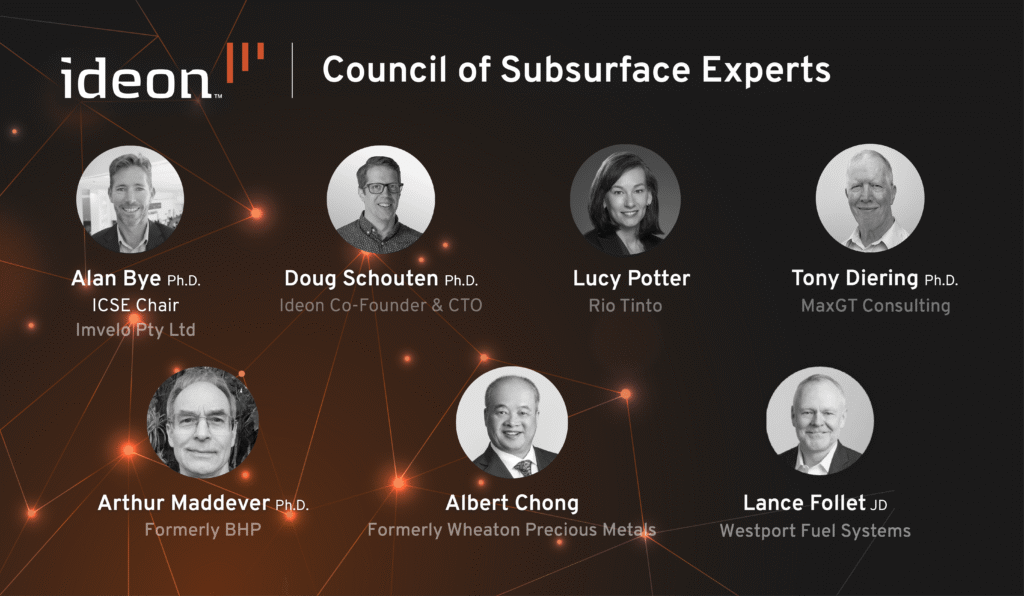
The Ideon Council of Subsurface Experts (ICSE) brings together seasoned experts from across the mining value chain to help Ideon address the industry’s most pressing subsurface challenges. Currently General Manager, Technical at Rio Tinto, Lucy Potter brings a wealth of knowledge in mineral exploration and resource management. With more than 20 years working with major and mid-tier public mining and minerals companies, she is a trusted strategic advisor on technology innovation and oversight of mine digital transformation projects.
In the third article of our series spotlighting ICSE members, Lucy shares her perspectives on what makes a dependable leader, how trust and transparency shape safer mining operations, and the importance of communication in building strong assurance practices.
This conversation has been edited for brevity and clarity.
You’ve led teams across mineral exploration, resource strategy, digital transformation, and major hazard assurance. What are some of your biggest highlights that have been impactful as a leader?
I stepped into leadership quite organically. I was a part of a small team that eventually began to steadily grow, and we reached a point where prioritization, structure, and direction were essential. Without being formally assigned the role, I naturally found myself stepping up to provide that leadership. This experience was incredibly formative. I had the opportunity to shape the team from the ground up – how it would operate, who we would bring on, and what kind of culture we wanted to build. It was very much a trial-and-error process, but it left a lasting impact on how I lead.
My current role is quite different. I lead highly technical experts in disciplines outside my own expertise, so I’m far less hands-on than I used to be. Instead, I focus on asking the right questions, creating clarity, and – most importantly – trusting the people I work with. This period has been especially impactful because I’m leading a team through uncertainty and change. But I’m intentional about being a leader I would want to have: steady, transparent, and supportive. Another highlight throughout my career has been learning from other leaders. Observing what I admire — and discovering where my values don’t align — has helped shape my own philosophy.
As an ICSE member, how do you see your role helping to guide the mining industry toward greater innovation and safety best practices in the years ahead?
Being a member of ICSE gives me a huge opportunity to work with other domain experts. The council brings together experts from across the industry, each with different disciplines and strengths. My background is in exploration, resource modelling, and risk management. Knowing this, I can apply what I bring to the table and collaborate effectively with others who complement it. None of us has all the answers individually. But collectively, we can take on complex problems in an effective way.
Ideon has a tremendously talented team, an incredible strategy, and a big vision. I see our role in ICSE as helping guide that energy in a practical direction – ensuring our insights and experience help the company create meaningful impact for the mining industry.
What core principles do you follow when you’re in a leadership position?
My principles aren’t revolutionary, but I believe they’re fundamental in a leadership position. Integrity is non-negotiable – being able to act consistently with your values, and ensuring your actions align with what was communicated. Availability is another principle that I prioritize. I have had experiences with leaders who were inaccessible, and it became a bottleneck. When people struggle to get time, feedback, or decisions, it slows everything down. I try not to block progress for my team. Whether it’s helping remove barriers or offering guidance, I see availability as a key part of supporting people effectively.
Building safer and smarter mining operations relies heavily on trust and transparency. How do you see mining leaders fostering these qualities effectively today?
I’ve had experiences where I’ve been genuinely inspired by leaders in the industry who are fostering trust, whether that’s through big initiatives or small, human moments. On a larger scale, I recently saw an operational review at one of our sites that, instead of relying on consultants, thoughtfully involved individuals who work on the shop floor. Ensuring that people feel heard builds ownership and accountability – building trust among team members.
Small gestures can be just as powerful. I recently attended a meeting where a senior leader openly shared that they had used the Employee Assistance Program. Leaders often promote these resources, but rarely do they admit to using them themselves. Hearing a senior leader say, “I need help sometimes, too,” was incredibly impactful.
I’ve also seen strong leadership in moments following serious incidents. One leader responded not with frustration, but with, “What we can learn from this?” Moments like these show that it’s okay to be human. When leaders shift the focus away from fault and toward learning, they create space for honesty and trust. That mindset is something I find inspiring.
In your current role, you handle assurance for major hazards such as mine waste and process safety. If you were to design an assurance toolkit for the next generation of mining leaders, what would you include?
First, I would start with clear, plain communication. Our industry often defaults to jargon and acronyms, and sometimes people overcomplicate things to sound more knowledgeable. But effective assurance starts with language that everyone understands. Second, I would emphasize governance and accountability. People want to know their role, their purpose, and their responsibilities. When expectations are clear, trust follows. People can act confidently and make sound decisions. Without transparency, it’s difficult for people to operate efficiently.