REVEAL™
for Resources
Develop a detailed understanding of an identified ore body, improving and reconciling model accuracy quicker with less in-fill drilling.
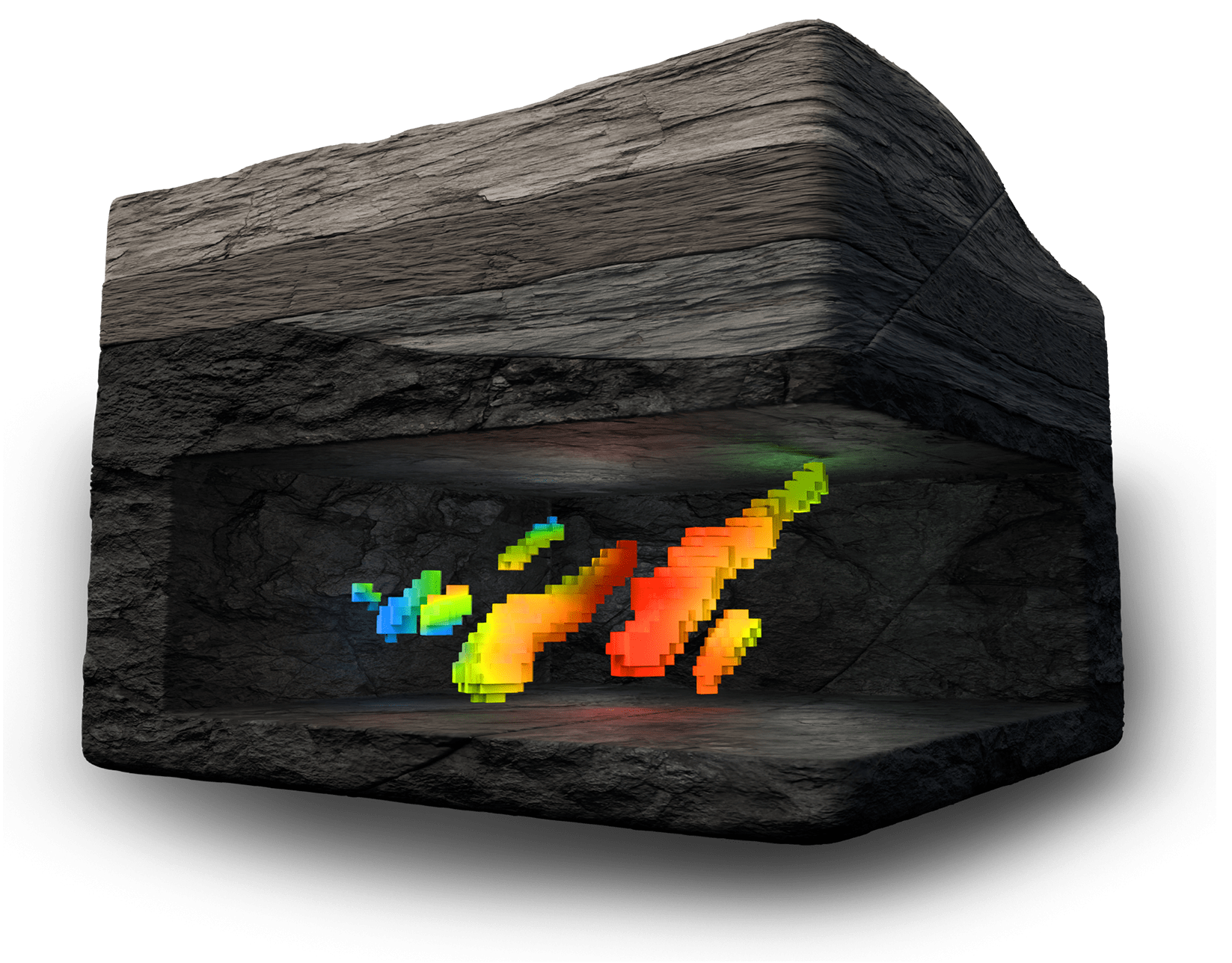

Improve resource modelling with high-resolution 3D density models of the ore body, with minimal drilling.

Resolve density variability across the resource, reducing discrepancies between planned and actual recovery.

Reduce economic uncertainty with more reliable tonnage forecasts and optimized mine planning.
Drill less. Recover more. Faster.
“Validated against known geology, muon tomography is an effective tool for subsurface density characterization. This broad-scale, high-resolution visibility allows us to operate more cost-effectively and decrease our exploration footprint.”

With 400 m drill hole spacing, Ideon can deliver insights typically seen from 50 m spacing.
Ideon’s high-resolution imaging solutions and AI tools enable miners to move quickly from identifying an orebody to understanding what resource is available.
REVEAL™ for Resources can dramatically reduce the need for in-fill delineation drilling, improve ore recovery outcomes, and accelerate time to market for the metals produced – ultimately saving millions of dollars and reducing planning risk.
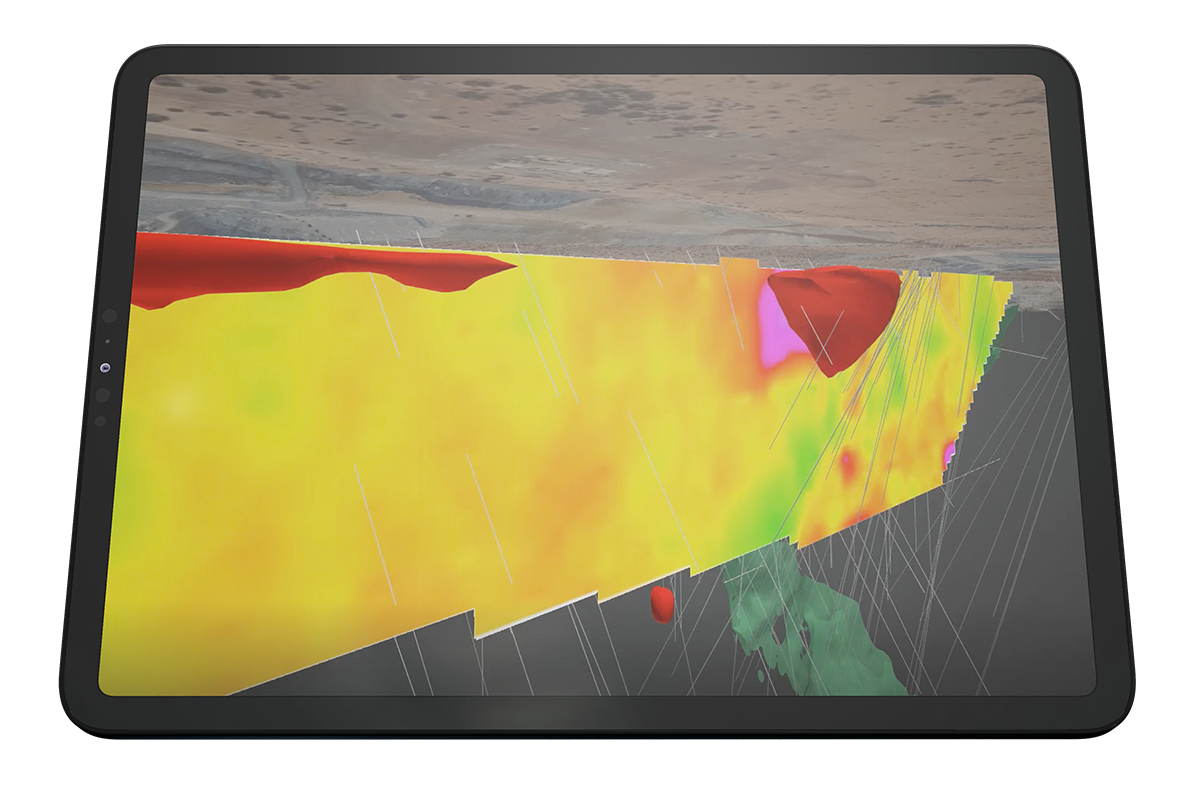
Gain an unmatched understanding of your resource, de-risking operations and unlocking economic value:
Reduce drilling by >40%
Build a detailed understanding of the resource with wide drill spacing, focusing drill activity on validation rather than delineation.
Reduce time to understanding by >30%
Accelerate recovery with improved model accuracy, and confidently inform mine planning decisions.
Unlock millions in value
Develop a precise understanding of tonnage to be mined, hauled, and processed, resulting in a more accurate production forecast and greater economic confidence in the resource available.